دليل DigFair · 17 أكتوبر 2026
How to Start a Crypto Faucet Website for Real New Visitors
Learn how to plan a sustainable crypto faucet website, from reward economics and fraud rules to launch checks, promotion, and user retention.
A faucet looks simple to a visitor: complete an action, receive a small reward, and return later. The owner has a more complicated job. Every claim creates a cost, every advertising placement affects trust, and every rule needs to work when somebody tries to exploit it. Learning how to start a crypto faucet website therefore begins with a business model rather than a theme or a domain name. A modest launch that makes its limits clear is more valuable than a polished interface that cannot honor claims. Build around a particular audience and a repeatable reason to return, not the assumption that traffic will immediately pay for itself.
Define a reward promise before choosing software
Write down exactly what earns a reward. Is it a timed claim, a completed task, a viewed advertisement, or a combination? Decide which behavior is eligible, how often an account may perform it, and what happens when verification fails. These choices determine the database fields, abuse controls, and help text your project needs. A vague promise such as “earn unlimited coins” attracts the wrong expectations and makes customer support harder.
Model the smallest possible user journey: landing page, registration, claim instructions, eligibility check, recorded balance, and withdrawal status. For each screen, identify an error state. A visitor with an expired session should see a clear explanation rather than a claim that appears to disappear. Keep a written change log for reward rules so returning users can understand what changed.
Calculate the cost of a claim before promising one
The core calculation is simple: expected eligible claims multiplied by reward cost, plus payment and operating expenses. Revenue from advertising or other sources is uncertain until actually measured. Model a low-traffic and a high-traffic day, and ask whether you can meet obligations in both. Include infrastructure, support time, failed transactions, and a reserve for delayed advertiser receipts. A reward balance displayed on a screen is still a liability to the user, even before withdrawal.
Separate confirmed earnings from promotional credits, and keep your ledger auditable. Do not change thresholds retroactively merely because an advertising campaign underperformed. A faucet that pays smaller, transparent rewards consistently has a more defensible reputation than one that displays attractive figures and then freezes withdrawals without explanation.
Design abuse defenses without punishing legitimate users
Attackers may register duplicate accounts, automate claims, or reuse the same device in ways that distort rewards. Rate limits, account verification, server-side eligibility checks, and anomaly review are safer starting points than trusting client-side timers. Record why a claim was rejected, and establish a way to dispute a false positive. Avoid publishing exact detection thresholds that invite gaming.
Privacy belongs in the same design conversation. Store only information you genuinely need, secure administrative access, and tell people what data is used to detect abuse. Legitimate visitors may share networks or devices, so a suspicious signal should prompt investigation rather than an automatic accusation. Publish rules before your first claim goes live.
A prelaunch sequence for a small owner-operated faucet
- Describe your intended user and the one earning action you will support initially.
- Write reward, eligibility, withdrawal, and anti-abuse terms in plain English.
- Test registration, repeat claims, rejected claims, and interrupted sessions on mobile.
- Reconcile test balances against the underlying transaction records.
- Fund a controlled pilot and monitor support messages before wider promotion.
- Set a weekly review of claim costs, genuine retention, and disputes.
Test with people who did not build the site. Ask them to explain when a claim becomes available and where a withdrawal can be checked. Confusion here is a more urgent bug than an unfinished decorative feature.
Write the public policies as if support must enforce them
A rules page is useful only when it resolves an actual question. Specify which actions count, when balances change, and what a user can do if a credit does not appear. Test the wording by giving a support volunteer three hypothetical disputes and asking them to decide each one using only the published policy. If the outcomes conflict, revise the policy before launch. Keep screenshots or archived versions when material rules change so the team can identify which notice applied at the time.
Make withdrawal history and contact information easy to find. Users should not have to search a chat channel to discover whether a payment is pending or whether a claim was rejected. Those small interface decisions reduce repetitive support and help new visitors assess whether the service is responsibly managed.
Choose a build path and acquire your first relevant visitors
Custom development buys flexibility but also makes you responsible for security, deployments, and maintenance. A packaged implementation can shorten setup time, provided you verify what is actually delivered and who maintains it. DigFair's السوق offers installed, branded website packages; its Crypto Faucet Site example is approximately $120 with an indicative seven-day delivery, and current pricing belongs on the market page. Treat the package as the beginning of operations, not proof of profitability.
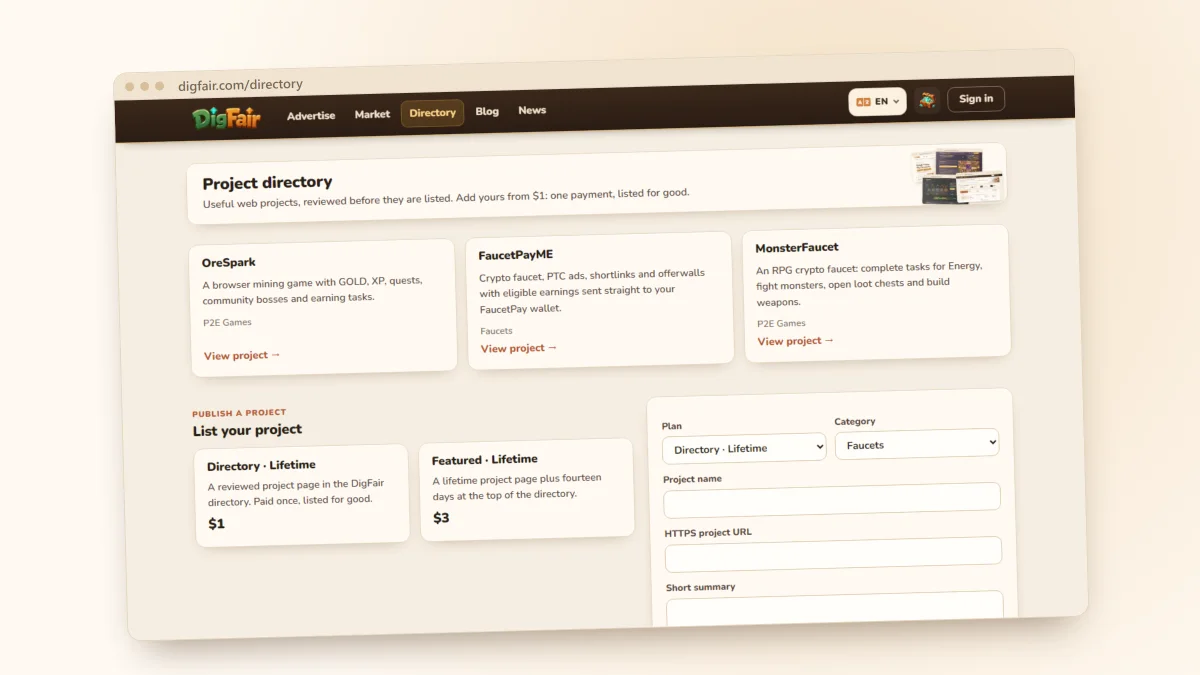
Once the earning process works, promote it to people likely to understand the format. FaucetPayME is an example of a crypto-earning platform in the DigFair network and provides useful context for what this audience expects to recognize quickly: understandable actions and payment information. Measure repeat legitimate visits rather than raw registrations. When thinking again about how to start a crypto faucet website, the decisive milestone is not launch day; it is the first period in which claims, payments, rules, and user questions remain consistent.